- Home Page /
- Books /
- Arts & Photography /
- Music /
- Instruments /
- Voice /
- Counterpoint: The Polyphonic Vocal Style of t...


Item #:
2586897
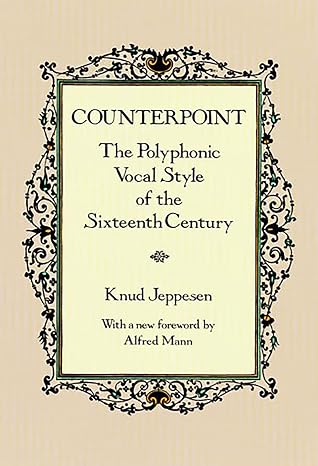
Counterpoint: The Polyphonic Vocal Style of the Sixteenth Century (Dover Books On Music: Analysis)
85% of respondents would recommend this to a friend
Item #:
2586897
GMD 1804
Price Details
Excluding Shipping & Custom charges ( Shipping and custom charges will be calculated on checkout )
*All items will import from US
31%
In stock
 Imported from USA store
QTY:
Order now and get it around Friday, October 02
Secured transaction
Ubuy works hard to protect your security and privacy. Our advanced payment security system ensures confidentiality by encrypting your information during transmission using AES (Advanced Encryption Standards) and SSL (Secure Socket Layer) protocols. Your payment details are 100% secure as we do not share your payment details with third party sellers.
Our Top Logistics Partners


This classic text is an exceptionally useful resource, ideal for classroom use in teaching modal counterpoint

Fast
Shipping

Free
Return*

Secure Packaging

100% Original Products

PCI DSS Compliance

ISO 27001 Certified



Note: Step Down Voltage Transformer required for using electronics products of US store (110-120). Recommended power converters Buy Now.


What Stands Out
In-Depth Analysis
Offers comprehensive insights into the polyphonic vocal style, making complex musical concepts accessible for both students and enthusiasts.
Rich Illustrations
Features detailed illustrations that enhance understanding of musical techniques and styles prevalent in the sixteenth century, providing visual context to the analysis.
Historical Context
Situates the polyphonic style within its historical framework, allowing readers to appreciate the cultural significance and evolution of vocal music during the Renaissance.
Product Details
- Classic introductory text on the polyphonic vocal style perfected by Palestrina
- Maintains a careful balance between theoretical and practical problems, historical and systematic methodology
- Ideal for classroom use in teaching modal counterpoint
- Part One offers an outline history of contrapuntal theory by the world-renowned musicologist Knud Jeppesen
- Part Two contains extended treatment of species counterpoint in two, three, and four parts, as well as counterpoint in more than four parts
- Generously supplied with musical examples, exercises, solutions, and illustrations
| Publisher | Dover Publications |
| Publication date | March 27, 1992 |
| Edition | Revised ed. |
| Language | English |
| Print length | 320 pages |
| ISBN-10 | 048627036X |
| ISBN-13 | 978-0486270364 |
| Item Weight | 14.4 ounces (408.24 grams) |
| Dimensions | 6.14 x 0.61 x 9.2 inches (15.6 x 1.5 x 23.4 cm) |
Who Should Buy?

-
Music Students
Ideal for undergraduate music students studying polyphonic techniques of the sixteenth century for a deeper understanding.
-
Choral Directors
Useful for choral directors seeking to enhance their repertoire with historically informed interpretations of vocal works.
-
Music Enthusiasts
Perfect for enthusiasts of Renaissance music wanting to explore the complexities of polyphonic styles during this era.

-
Casual Listeners
Not suitable for casual music listeners without an interest in detailed music theory or historical context.
Product Description
About This Item
Product Description: Counterpoint: The Polyphonic Vocal Style of the Sixteenth Century is a must-have book for any music enthusiast or student of music history. This illustrated analysis paperback, published by Dover Books On Music, is a comprehensive guide to the intricacies and beauty of the polyphonic vocal style that dominated the music scene in the sixteenth century. Dive into the rich history of polyphonic vocal style with this Dover publication. Explore the techniques, theory, and notation used by composers during this period.
Whether you are a beginner looking to expand your knowledge of counterpoint or a seasoned musician searching for new repertoire, this book has something to offer. Discover the genius of the great sixteenth century music composers as you delve into the pages of Counterpoint. Uncover how they masters the art of blending multiple voices and creating harmonious melodies. With this book, you will gain valuable insights into their creative process and the instruments they used to bring their compositions to life. Counterpoint: The Polyphonic Vocal Style of the Sixteenth Century is an essential addition to any music library.
Whether you are studying music history, composition, or simply have a passion for the beautiful melodies of the past, this book will undoubtedly enhance your understanding and appreciation for the rich tradition of sixteenth century music. Don't miss out on this opportunity to explore the wonders of counterpoint and the polyphonic vocal style. Order your copy of Counterpoint: The Polyphonic Vocal Style of the Sixteenth Century today and embark on a musical journey like no other.
Have any Query? Chat with us
Customer Questions & Answers
-
Question:
What topics are covered in 'Counterpoint: The Polyphonic Vocal Style of the Sixteenth Century'?
Answer: This book delves into the intricate techniques of counterpoint, particularly the polyphonic vocal styles that defined the sixteenth century. It covers historical context, notable composers, and detailed analysis of the musical structures employed during this era. Understanding these topics is crucial for music students, educators, and enthusiasts as they explore the evolution of Western music, making it an essential read for those interested in music theory and history. -
Question:
Who is the intended audience for this book?
Answer: The intended audience for 'Counterpoint: The Polyphonic Vocal Style of the Sixteenth Century' includes music students, educators, and anyone with an interest in music history. Its detailed analysis and illustrative examples make it suitable for both academic settings and personal study. Whether you're a composer looking to enhance your skills or a musicologist researching the period, this book serves as a vital resource for deepening your understanding of polyphonic techniques. -
Question:
How does this book differ from other music theory texts?
Answer: 'Counterpoint: The Polyphonic Vocal Style of the Sixteenth Century' focuses specifically on polyphony of the Renaissance period, setting it apart from more general music theory books. It offers in-depth analysis and insights into the unique vocal styles and compositional techniques of that time. Additionally, its illustrations and practical examples provide a clearer understanding of complex concepts, making it a valuable addition for those looking to specialize in this particular area of music. -
Question:
Are there practical exercises included in the book?
Answer: Yes, the book features various exercises aimed at applying the principles of counterpoint discussed in the text. These exercises encourage readers to practice composing in the polyphonic style, fostering hands-on learning and a deeper grasp of the material. For music students and educators, these practical applications can enhance classroom learning or personal study, allowing one to effectively engage with the techniques of the sixteenth-century vocal style. -
Question:
Is 'Counterpoint' suitable for beginners in music theory?
Answer: While the book is accessible, some prior knowledge of music theory is recommended for beginners. It introduces concepts systematically but assumes a fundamental understanding of music notation and general theory. Beginners may find it helpful as a supplementary resource alongside introductory materials. This way, they can build a solid foundation to fully appreciate the advanced discussions on polyphony and counterpoint found within its pages. -
Question:
Who are the notable composers analyzed in this book?
Answer: The book explores the works of prominent composers such as Palestrina, Orlando di Lasso, and Thomas Tallis, who exemplified the polyphonic style during the sixteenth century. Analyzing their compositions allows readers to understand the innovative techniques these musicians employed. Through examining their approaches, aspiring composers and musicologists can gain invaluable insights that inform their creative practices and analytical skills. -
Question:
What makes this book a worthwhile investment for music libraries?
Answer: 'Counterpoint' is a seminal text that has been referenced in numerous studies about Renaissance music and counterpoint. Its detailed analysis and rich historical context make it a foundational resource for music libraries. By adding this book to their collections, libraries can provide valuable educational material for students and researchers exploring the complexities of music from this influential period. -
Question:
Can this book be used in academic courses?
Answer: Absolutely, 'Counterpoint' is designed for use in academic courses focused on music theory, composition, and history. Professors and educators can incorporate it into their syllabi, providing students with a direct reference to the techniques and styles studied in class. Its thorough approach ensures that it aligns well with various curricula, fostering a comprehensive understanding of polyphonic voices in music history. -
Question:
Is there an illustrated version of the book?
Answer: Yes, the illustrated version of 'Counterpoint: The Polyphonic Vocal Style of the Sixteenth Century' includes visuals that complement the text, making complex musical concepts more digestible. These illustrations serve to enhance understanding of polyphonic techniques and styles depicted in the book, offering a richer learning experience. For visual learners, this feature is particularly beneficial, bridging the gap between theory and practice. -
Question:
Where can I buy 'Counterpoint: The Polyphonic Vocal Style of the Sixteenth Century'?
Answer: You can buy 'Counterpoint: The Polyphonic Vocal Style of the Sixteenth Century' through Ubuy, which offers a wide selection of books and music resources. This platform makes it convenient to access this insightful publication, allowing you to explore its in-depth analysis of polyphonic techniques directly from your home. Ubuy's user-friendly interface ensures a seamless shopping experience for music enthusiasts and scholars alike.
Voice Editorial Review
The Dover Books on Music paperback "Counterpoint: The Polyphonic Vocal Style of the Sixteenth Century" presents species counterpoint, which could be used as a specialized exercise in voice leading technique suitable for composers writing in later styles. However, this method has little to do with 16th century style, in which there are many aspects that species counterpoint cannot approach, and the rhythmic values are distorted. Moreover, the book does not give an accurate account of the modal system of the period. As a result, this book is more suitable for undergraduates and those interested in musical techniques rather than developing an informed understanding of the 16th-century polyphony.
Customer Reviews & Ratings
93 customers ratings
-
5 Star
80%
-
4 Star
10%
-
3 Star
6%
-
2 Star
2%
-
1 Star
2%
Review this product
Share your thoughts with other customers
Pros
- Clear method of learning counterpoint for basics and musical techniques
- Good textbook for Palestrina-style counterpoint exercises
- Classic Dover style presentation
Cons
- Species counterpoint method is not suitable for developing an early understanding of the 16th-century polyphony
Platform Trust & Buyer Confidence

JK
Jasmin
Verified buyer
“Great products and very good service: very easy and very fast international delivery.”
9 September 2026 · via Trustpilot
AG
Anke
Verified buyer
“Wonderful online shopping experience, smooth transaction from the start. Payment method works conveniently and delivery is unexpectedly fast and reliable. You go the extra mile for service. What makes this even more amazing, you deliver to Namibia. I will remain a happy Ubuy customer and will increase my purchases for sure! Thank you!”
10 September 2026 · via Trustpilot
H
Hazel
Verified buyer
“Very easy to find the products what you need, and so fast delivery, that’s why I highly recommended to others costumers to used ubuy.”
10 September 2026 · via Trustpilot
O
Opaleye
Verified buyer
“I received exactly what I ordered I was skeptical about your site because that was my first time to order. But the order came timely and neatly packaged. I was not disappointed. Thank you.”
11 September 2026 · via Trustpilot
AC
Adele
Verified buyer
“Easy to find and order what you want on the website. Delivery is quick to the UK”
8 September 2026 · via Trustpilot
Secure Checkout
Global Delivery
Easy Returns
Genuine Products
Product Price History
Important information
- Limitations : For products shipped internationally, please note that any manufacturer warranty may not be valid; manufacturer service options may not be available; product manuals, instructions, and safety warnings may not be in destination country languages; the products (and accompanying materials) may not be designed in accordance with destination country standards, specifications, and labeling requirements; and the products may not conform to destination country voltage and other electrical standards (requiring use of an adapter or converter if appropriate). The recipient is responsible for assuring that the product can be lawfully imported to the destination country. When ordering from Ubuy or its affiliates, the recipient is the importer of record and must comply with all laws and regulations of the destination country.
- Not all the products listed on Ubuy are for sale, as Ubuy is a global search engine. Products are subject to export/trade regulations.
GMD 1804
Order now and get it around Friday, October 02
This item is not restrict in my country.(Please click on above link if this item is not restrict in your country, So our team will review and allow.)
QTY:
Secured transaction
PCI DSS compliant and ISO 27001:2022 certified, with encrypted payments and full buyer protection on every order.
Our Top Logistics Partners
Fastest cross-border delivery
Features & Benefits
- Text offers a superb outline history of contrapuntal theory
- Maintains a careful balance between theoretical and practical problems
- Contains an extended treatment of species counterpoint in two, three, and four parts
- Text is generously supplied with musical examples―exercises, solutions, and illustrations
- Distinguished scholar Alfred Mann has contributed a new foreword to Jeppesen's classic study
- Now available in paperback for the first time
Ubuy Assurance
Experience worry-free shopping with 100% original products, PCI DSS-compliant payment security, ISO 27001-certified data protection, the fastest cross-border delivery, free returns *, and secure packaging on every order.